Complete Custom-Ordering Guide
How to Custom-Order Boy Blazers & Vests
The Stakes Are Higher Than Most Parents Realize
A boy's first blazer marks a threshold. It announces readiness for occasions that matter—weddings, graduations, recitals, interviews at competitive schools. Yet the children's formalwear market remains flooded with disposable garments: fused construction, synthetic blends, standardized proportions that fit almost no actual child properly.
Custom ordering solves this problem decisively. But the process demands knowledge. Tailors and online made-to-measure services use terminology that obscures as much as it reveals. Too many parents walk into a fitting with high expectations and walk out with an overpriced disaster, simply because nobody told them what questions to ask.
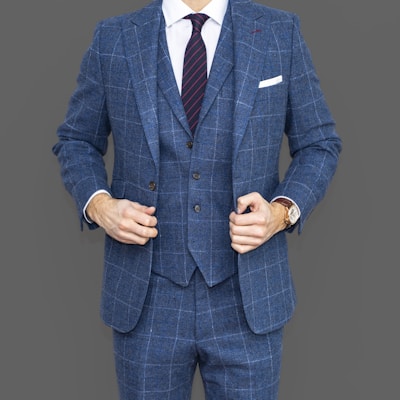
The Three Tiers of Custom: Know What You're Buying
The term "custom" covers vastly different products at vastly different price points. Clarity here prevents expensive mistakes.
True bespoke means a paper pattern created from scratch for one specific body. The tailor takes twenty-plus measurements, accounts for postural asymmetries, and constructs the garment through multiple fittings, typically three minimum. The canvas is hand-stitched. The fabric is cut by hand. Every decision serves that singular client.
For children, bespoke rarely makes economic sense. Growth renders the investment temporary. Reserve bespoke for boys with significant fitting challenges: unusual proportions, postural issues, or physical differences that defeat standard patterns. Price-wise, expect fifteen hundred dollars at the absolute minimum, and quotes can climb well past five thousand for complex work with premium fabrics. Timelines run six to ten weeks, sometimes longer if the tailor is busy. For most families, that math simply doesn't work.

Most parents should stop here and not look back.
Made-to-measure starts with an existing pattern and adjusts it according to client measurements. Cutting is typically machine-assisted. Construction combines machine and hand work in varying proportions. The garment fits better than ready-to-wear but lacks the individualized architecture of bespoke.
Pricing runs all over the map. Decent MTM blazers can be found for three hundred dollars from online services, and prices can push past twelve hundred at higher-end retailers using the same basic approach. Most orders arrive in two to four weeks, fast enough for that wedding invitation received last month. The fit improvement over ready-to-wear is substantial. The price remains reasonable. For the vast majority of boys needing a blazer, this tier represents the optimal choice.
Purchasing a standard-sized garment and modifying it through alterations is not custom ordering. It is damage control.
Alterations can adjust sleeve length, trouser hem, and waist suppression. What alterations cannot fix: shoulders that are too wide, armholes that are too low, chest proportions that don't match the wearer. This approach suits boys with standard proportions and limited budgets. It does not belong in the same category as actual custom work. Budget somewhere between eighty and four hundred dollars total depending on how much work the garment needs, expect one to two weeks, and manage expectations accordingly.
Measurements: Precision Is Non-Negotiable
Every fitting failure traces back to measurement error. Children present unique challenges: they fidget, they slouch, they grow between measurement and delivery. Rigorous technique compensates for these variables.
Chest
The foundation measurement. Wrap the tape horizontally around the fullest part of the chest, passing under the armpits and across the shoulder blades. Maintain the tape parallel to the floor. Do not compress. Two fingers should slide beneath the tape at the front. Measurement error here cascades through the entire garment. Too small produces the dreaded X-crease across the button. Too large creates hollow, shapeless draping.
Shoulder Width
This is the single most critical measurement for jacket fit, and also the single hardest element to alter post-construction. Measure from the bony point at the end of one shoulder, across the back of the neck, to the corresponding point on the opposite shoulder. The shoulder seam of the finished jacket must terminate precisely where the shoulder bone ends. Seams that extend onto the upper arm create a "borrowed from Dad" appearance. Seams that fall short restrict movement and compress the trapezius. Shoulder alterations require essentially deconstructing and rebuilding the jacket. Get this measurement right the first time.
Sleeve Length
From the shoulder point, follow the outside of the arm (slightly bent, not ramrod straight) to the wrist bone. The finished sleeve should expose somewhere around one to one and a half centimeters of shirt cuff, though some prefer a bit more showing. For growing boys, add a couple extra centimeters to this measurement and request the extra length be tucked into the sleeve hem rather than cut away. This creates a reservoir for future lengthening.
Jacket Length
From the prominent vertebra at the base of the neck (C7, the one that protrudes when the head tilts forward) to the desired hem position. Standard proportion: the jacket covers approximately eighty percent of the seat and reaches roughly to the thumb knuckle when arms hang naturally. Children's blazers often run slightly shorter than adult proportions for aesthetic balance. Communicate the desired length explicitly; do not assume the tailor will interpret "standard" correctly.
Waist
Measured at the natural waistline, typically just above the navel. This determines how much the jacket suppresses at the midsection. Athletic boys with broad shoulders and narrow waists need significant suppression. Stockier builds require less.

Vests demand the same chest and waist measurements, plus:
Vest Length
From the shoulder point to the desired hem, which should fall a couple centimeters below the trouser waistband when standing. Too short exposes the shirt and belt line. Too long bunches when sitting.
Neck
Measured below the Adam's apple with the tape resting comfortably, not tight against the throat. This determines the vest's neckline depth.
Before a measurement session: dress the boy in a thin dress shirt only. No sweater, no undershirt layered beneath. These add bulk that throws off every number captured.
Have him stand naturally. Not parade-ground stiff, not slouching. Just standing. Shoulders relaxed, arms hanging, weight on both feet. Kids have a tendency to puff up their chest or pull their shoulders back when they know they're being measured. The goal is actual posture, not "picture day" posture.
Take every measurement twice. If the numbers don't match, take a third. Quarter-inch discrepancies can turn into jackets that pull across the back or gap at the collar.
Write down both inches and centimeters. Some vendors use metric, some use imperial, and conversion errors are common. Also date the measurements. This part is easy to forget, but children's bodies change fast. Anything older than three or four weeks needs to be verified again before submitting an order.
Fabric Selection: Where Money Gets Wasted
A beautiful jacket in the wrong fabric falls apart in months. A mediocre design in the right fabric serves for years.
Fabrics are labeled Super 100s, Super 120s, Super 150s. The number indicates fiber fineness—higher means thinner individual wool fibers, measured in microns. Finer fibers feel softer, drape more elegantly, look more luxurious.
But here's what the salesperson won't volunteer: finer fibers are also dramatically more fragile.
| Super Number | Fiber Range | Characteristics | Recommendation |
|---|---|---|---|
| Super 80-100 | 18-19 microns | Resists pilling, tolerates friction, bounces back from wrinkles. Substantial hand. | Workhorse range - best for boys |
| Super 110-130 | Compromise zone | Noticeably softer than Super 100, still reasonably durable. | For monthly wear or older boys |
| Super 150+ | Very fine | Gorgeous fabrics but friction destroys them. | Not recommended for children |
💡 Standard Recommendation
For boys' blazers intended to last through actual wear: stick with Super 100, maybe 110 for particularly appealing fabrics. Don't go higher.

Weight is measured in grams per square meter (GSM) or ounces per yard.
Lightweight fabrics (roughly 180 to 220 GSM) work for summer events but wrinkle easily and lack structure. Heavyweight options (maybe 280 to 350 GSM) handle cold weather beautifully but can overheat indoors.
The middle ground, call it 230 to 260 or 270 GSM, handles four seasons without complaint. Unless ordering specifically for a summer wedding in Phoenix or winter ceremonies in Minnesota, this is the target range.
100% Wool
The benchmark. Natural temperature regulation, excellent drape, inherent wrinkle recovery. The only choice for formal occasions where appearance matters.
Wool-Polyester Blends (70%+ wool)
Added durability and wrinkle resistance at the cost of some breathability and luxury hand. A defensible choice for rough-and-tumble boys who will subject the garment to stress.
Wool-Elastane Blends (2–5% stretch)
Modern performance fabrics that move with active bodies. The stretch component reduces binding during movement, which is valuable for children who will not sit still. Ensure the wool content remains dominant.
Cotton and Linen
Both read as casual regardless of styling. Cotton wrinkles severely. Linen wrinkles aggressively within hours. Neither belongs at formal occasions. Save them for garden parties and summer barbecues where a blazer is more affectation than requirement.
💡 Recommendation
For most clients: 100% wool or a blend with at least 85% wool content. If the boy can't sit still for more than thirty seconds, consider a small amount of elastane in the mix.
Navy Blue
The single most versatile choice. Works for weddings, graduations, interviews, holiday events, religious ceremonies. Neither as severe as black nor as limiting as brown. For a first or only blazer, navy is the answer. This isn't even a close call.
Charcoal Gray
The second-most-versatile option. Slightly more formal than navy, works better in evening contexts. An excellent second blazer for boys who need variety.
Black
Too severe for most daytime occasions. Reads as funereal or service-industry. Reserve for evening formal events that specifically call for black, or avoid entirely until the teen years.
Patterns
Fine pinstripes and subtle windowpanes can add visual interest without sacrificing versatility. Bold checks, prominent stripes, and novelty patterns limit occasion-appropriateness. For a child's first blazer, solid colors provide maximum utility.
Construction: The Hidden Architecture
The internal structure of a blazer determines how it drapes, how it ages, and whether it ever truly fits the wearer's body. This invisible architecture separates quality garments from expensive disappointments.
The gold standard. A floating interlining of horsehair or camel hair extends from the shoulder through the chest and lapels, attached by hundreds of hand stitches rather than adhesive. This canvas layer allows the fabric to drape naturally, molds gradually to the wearer's body over time, and breathes through the structure.
Full canvas blazers improve with wear. The canvas conforms to postural quirks and movement patterns, creating a fit that ready-to-wear cannot match. Dry cleaning does not degrade the structure. The garment can last decades with proper care.
For children: full canvas makes sense only when the blazer will be worn frequently over multiple years by a boy whose growth has stabilized. Otherwise, the investment outpaces the wear-life. The payment is for longevity that won't be used.

The pragmatic middle ground, and my default recommendation for kids.
Canvas extends from the shoulder to mid-chest, covering the areas that most benefit from structure: shoulder roll, lapel shape, and upper chest drape. The lower jacket body uses fused (adhesive-bonded) interlining.
Half canvas captures most of the full canvas benefits at a significantly lower cost. The shoulder and lapel, which are the most visible construction elements, receive proper treatment. The lower body, which experiences less stress and scrutiny, accepts the compromise.
For children's blazers, half canvas represents the optimal construction choice. It delivers genuine quality without over-investing in a garment that will be outgrown.
The budget option. A synthetic interlining is heat-bonded to the fabric throughout the garment. Fusing is fast, cheap, and consistent, which is why it dominates the ready-to-wear market.
The problems emerge over time. Fused interlinings trap heat and moisture. They prevent the fabric from draping naturally. Most critically, repeated dry cleaning can cause delamination: the interlining separates from the fabric, creating visible bubbling that cannot be repaired. This can happen after as few as three or four cleanings with cheaper construction.
Fused blazers feel stiff when new and deteriorate with wear. They never conform to the body. For a garment worn once or twice and then discarded, fusing suffices. For anything intended to last, it fails.
Retailers do not always disclose construction type accurately. The pinch test provides verification:
Position thumb and forefinger on the chest area of the jacket, between the button and the lapel edge. Gently pinch and separate the outer fabric from the interior layers.
Three Distinct Layers
Layers that move independently = canvas construction
Two Layers
Layers that feel bonded together = fused construction
Perform the same test at the lower jacket body (near the hem) to distinguish full from half canvas.
Fit Assessment: The Checkpoints That Actually Matter
I could list twenty things to check. But honestly, four checkpoints catch ninety percent of problems. Master these and the rest is fine-tuning.
The Four Critical Checkpoints
The shoulder seam must terminate precisely at the shoulder point, the bony protrusion where the arm begins. Not on the upper arm (too large). Not short of the bone (too small).
View from behind: the seam should run straight across, parallel to the floor, without dipping or rising. A divot or dimple at the sleeve head indicates incorrect shoulder width.
Shoulder errors cannot be economically corrected. Reject any jacket that fails this checkpoint. Don't let anyone suggest "it's close enough." It isn't.
The jacket collar should rest smoothly against the shirt collar with no gap and no bunching.
Collar Gap
Jacket collar stands away from shirt collar - indicates insufficient back length or shoulder construction issues.
Collar Roll
Fabric bunches beneath the collar - indicates excessive back length.
Minor collar issues can sometimes be adjusted. Severe gaps or rolls suggest fundamental pattern problems.
Button the jacket (top button only on a two-button; middle button on a three-button). The fabric should lie smoothly across the chest without pulling or gaping.
X-Shaped Creases
Radiating from the button means the jacket is too tight.
Vertical Ripples
Along the button line means the jacket is too loose.
Lapel Bow
Lapels curve outward instead of lying flat - means the chest is too tight or shoulders are misaligned.
The Test
A flat palm should slide between the buttoned jacket and the shirt without resistance or excess space.

Have the wearer perform normal movements: sit down, stand up, raise arms, bend forward, twist at the waist. The jacket should accommodate all of these without significant binding, pulling, or distortion.
A custom garment that restricts movement has failed its purpose. Children will not tolerate discomfort. They will fidget, adjust, and ultimately refuse to wear the garment.
💡 Note
Other things to verify, like jacket length, sleeve length, and armhole height, matter too. But they're adjustable. The four checkpoints above are where orders go irreversibly wrong.
Child-Specific Considerations
Children are not small adults. Their proportions, behavior, and growth trajectories demand specific accommodations.
Every measurement for a child's garment should incorporate planned room for growth. Competent custom services build this in automatically; others require explicit instruction.
💡 Important
Request that all extra length be folded and tacked rather than cut away. This preserves material for future letting-out.
Children stress garments at points adults do not: elbows from crawling and climbing, seat from sliding on surfaces, knee and cuff from contact with floors. Fabric selection and construction should anticipate this abuse.
The Super number recommendation given earlier (100 to 110) accounts for this reality. So does the preference for half-canvas construction. Full canvas quality in a child's garment often ages out before aging in.
Adults will tolerate minor discomfort for appearance. Children will not. A scratchy wool, a binding armhole, a tight collar: any of these will produce fidgeting, complaining, and eventual garment refusal.
Select softer wool finishes. Ensure the armholes are high enough for movement. Verify that the neck and collar do not constrict. A child who is comfortable will wear the blazer willingly; one who is not will find ways to avoid it.
Vest-Specific Guidance
Vests (waistcoats) follow the same principles as blazers with several distinctions.
Three-piece ensembles (jacket, vest, trousers) signal heightened formality. Vests are expected for formal weddings (especially for ring bearers and junior groomsmen), black-tie junior events, and formal religious ceremonies.
A blazer without a vest remains versatile; a vest without a jacket looks incomplete. Invest in the blazer first.
Length
The vest should extend a couple centimeters below the trouser waistband, covering the shirt gap entirely. Test by having the wearer raise arms. No shirt should be visible between vest hem and trouser waist.
Closure
The bottom button of a vest traditionally remains unfastened. This convention traces to Edward VII but persists as standard etiquette. Ensure the vest looks correct with this button open.
Back Panel
Most vests feature a different (often satin or lining) fabric on the back, which remains unseen when a jacket is worn. For use without a jacket, consider a fully-faced vest with matching fabric front and back.
Matching Considerations
Vests should be ordered simultaneously with the jacket, cut from the same fabric bolt. Fabric dyes vary between production runs; even "matching" fabrics ordered separately may show subtle color differences that become obvious when worn together.
Care and Maintenance
A custom blazer represents meaningful investment. Proper care extends its useful life and maintains its appearance.
After the boy takes off the blazer, do not hang it straight in the closet. Give it a quick brush first using a natural-bristle clothes brush, going with the grain of the fabric. This removes the dust and lint that would otherwise work their way into the fibers and cause premature wear.
Then let it breathe. Hang it somewhere with air circulation for at least twenty-four hours before it goes back into the closet. The moisture from body heat needs time to evaporate. Skipping this step repeatedly leads to odors that don't come out without dry cleaning.
Never wear the same blazer two days in a row. Wool fibers need recovery time. If events occur on consecutive days, either two blazers are needed or accelerated wear on the one must be accepted.
Hangers matter more than most people realize. Wide, curved wooden hangers that approximate the shoulder shape are necessary, the kind that look like they belong in a nice hotel. Wire hangers from the dry cleaner create shoulder dimples that become permanent. Never let the blazer end up draped over a chair or tossed on a bed.
Give garments room to breathe in the closet. Crammed between other clothes, they can't air out properly, and wrinkles set in. A few centimeters between items is the minimum.
For longer storage, between school years for example, use a breathable garment bag. Cotton or canvas works. Plastic traps moisture and creates its own problems, including mildew in humid climates. Store somewhere cool, dry, and dark. Sunlight fades fabric faster than expected.
Moths are a concern. Cedar blocks work. Lavender sachets work. Replace them every few months or they stop working. More blazers are destroyed by fabric pests than by actual wear.
Dry cleaning is hard on wool. Every cleaning cycle strips natural oils from the fibers, leaving the fabric progressively stiffer and duller. The goal is to dry clean as infrequently as possible while keeping the garment presentable.
| Wear Frequency | Dry Cleaning Schedule |
|---|---|
| Weekly wear | Every 3-4 months |
| Monthly wear | Twice a year |
| Special occasions only | Once a year, or before long-term storage |
Between cleanings, a handheld garment steamer handles wrinkles and freshens the fabric without chemical exposure. Hold it a few centimeters from the surface. Don't press it directly against the wool. For minor stains, try a damp cloth and gentle blotting. No rubbing, no scrubbing. If blotting doesn't work, take it to a professional.
When dry cleaning is needed, find a cleaner who handles tailored garments specifically. The high-volume chain places optimize for speed and use harsher processes. A specialist who works with suits and formalwear will treat the fabric more gently.
The Order Process: Step by Step
Before contacting any vendor, establish clear parameters: purpose (specific occasion vs. general use), budget ceiling, timeline requirements, and must-have features (growth room, specific colors, matching vest).
Options include local bespoke tailors (highest quality, highest price, personal fitting sessions), made-to-measure retailers with physical locations (mid-range pricing, in-person measurement), and online MTM services (competitive pricing, self-measurement required).
For a first order, especially for a child, vendors with physical fitting locations reduce risk. Self-measurement for online services works reliably only with experience and careful attention to instructions.
Whether in-person or self-conducted, this session determines outcome. Review the measurement protocol above. Take every measurement twice. Record every value.
For in-person sessions, communicate the child-specific requirements: growth room, high armholes, comfort priorities. Do not assume the measurer will automatically accommodate these needs.
Select fabric based on the criteria outlined above: Super 100 to 110, middle-weight range, high wool content. Request swatches if ordering online. Screen colors are unreliable.
Specify style details explicitly: two-button single-breasted (standard recommendation), notch lapel (most versatile), flap pockets (most practical), single or double vent (both acceptable), half-canvas construction.
Before finalizing, verify all measurements against records, confirm fabric selection, review all style specifications, clarify growth allowance expectations, establish delivery timeline, and understand alteration/revision policies.
Upon delivery, conduct the checkpoint assessment. Identify any issues requiring correction. Most MTM vendors include one round of complimentary adjustments; verify this policy beforehand.
Do not accept a garment that fails the shoulder checkpoint. Do not accept a garment where the child expresses discomfort. Other issues can be adjusted; these cannot be fixed economically.
Final Assessment
Custom-ordering a boy's blazer or vest is not complicated. It requires only attention to detail and clear communication of requirements. The knowledge contained in this guide transforms the parent from passive consumer to informed client.
Parents who take time to understand fabric weights and construction types end up with blazers their sons actually want to wear. Those who walk in cold, trusting the salesperson to make every decision, often end up with lapels that bubble six months later.
A properly custom-ordered blazer fits the boy precisely, accommodates his growth, withstands his activity level, and serves occasions both expected and unforeseen. It represents not merely clothing but preparation, for moments when appearance matters, when first impressions count, when the external presentation must match the internal occasion.